
Shape Oak Park
Click here to view recommendations
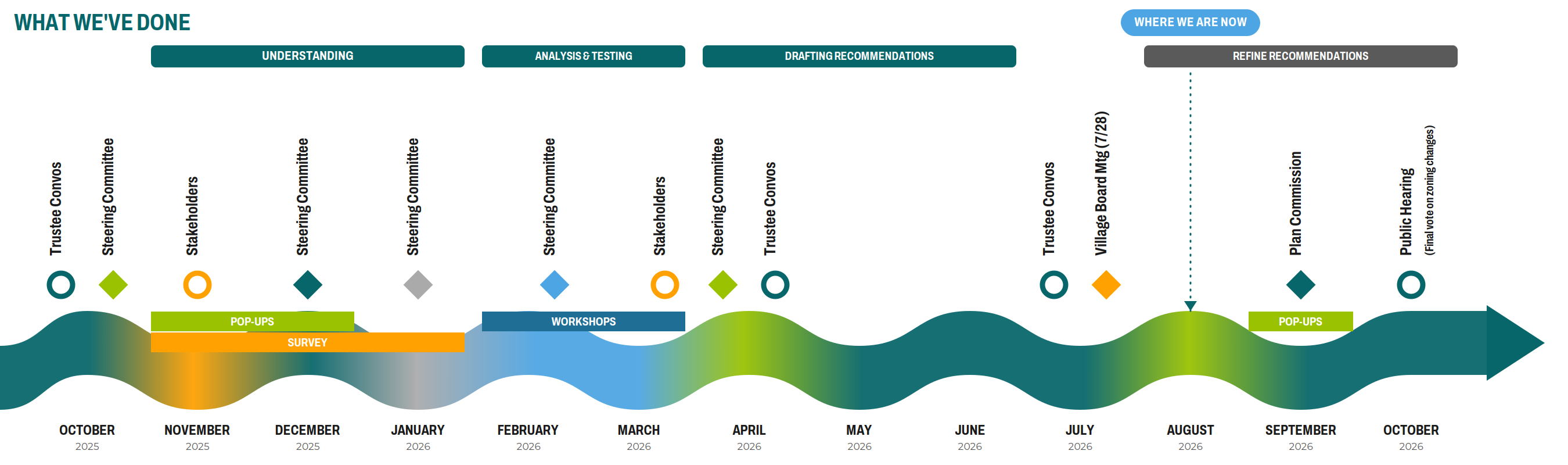
This document includes recommendations presented to the Board of Trustees on July 28. These recommendations are not final. Village staff and the consultant team will continue refining them based on Trustee feedback and ongoing community engagement. Revisions from the original July report are shown in red. The final zoning changes reflecting these recommendations and additional considerations will be presented to the Plan Commission by Village Planning staff in October.
Click here to view feasibility study
How will proposed zoning changes affect your property? Enter your Oak Park address or PIN to see a side-by-side comparison of existing and proposed zoning standards. You can also share your feedback directly from any property page.
Click here to utilize the Zoning Comparison Tool
SB Friedman was tasked with evaluating the financial feasibility of prototypical, small-scale residential development in Oak Park to provide market insights into development feasibility under the potential zoning changes. Click the link above to view the report.
Missing Middle Housing in Oak Park
Oak Park already contains many examples of missing middle housing. Five of Oak Park's residential districts currently only allow single-family homes, yet duplexes and small apartment buildings already exist there as non-conforming uses. In fact, the FAQ notes that several condos and duplexes already exist in the area, mostly as rentals, showing this housing type has long been part of the community's fabric. Shape Oak Park's proposed zoning update would formalize and expand on what's already present, rather than introducing an unfamiliar housing type.
Scroll through the photos below to see examples.
Project Overview
Oak Park has always been a leader—shaped by generations of residents who understood that great neighborhoods don't just happen, they're created through thoughtful, intentional choices. Today, Oak Park residents choose to live here because they want to thrive in a vibrant community that reflects their values of equity, inclusion, sustainability, and affordability. Our zoning code should support those same commitments.
Through Shape Oak Park, we are:
Inviting you to lead. Your input will actively guide our community's evolution through surveys, conversations, pop-up events, and workshops throughout the year.
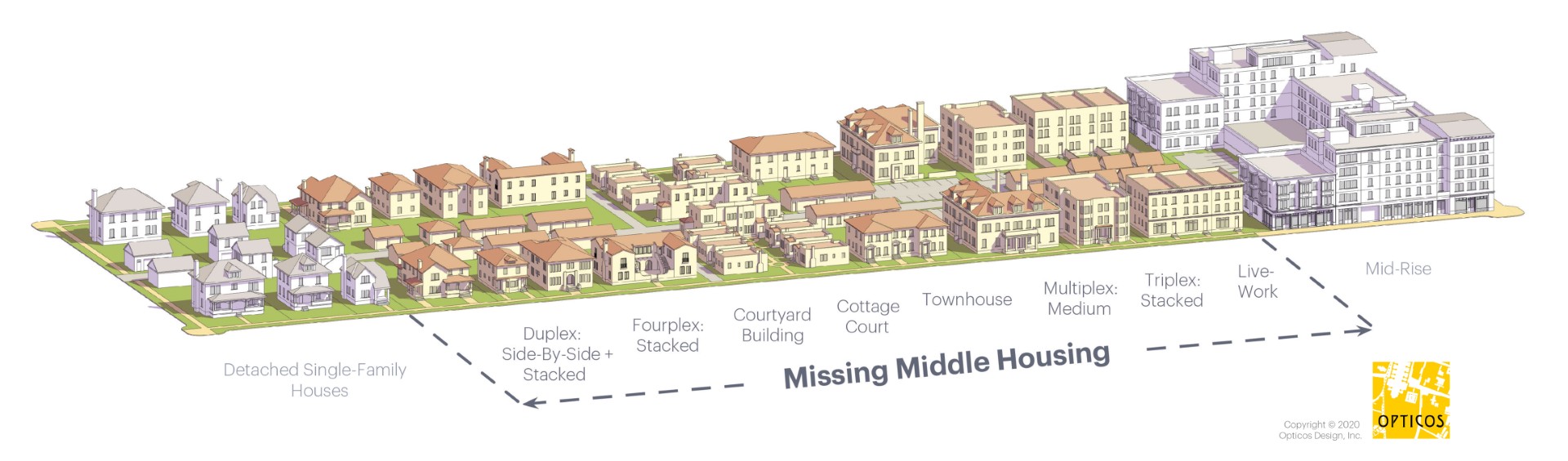
Exploring more housing choices. Missing middle housing—duplexes, townhomes, and small-scale buildings that match our neighborhood character—can create opportunities for teachers, families, nurses, seniors, and everyone who wants to call Oak Park home.
Honoring our character. We're proposing gentle, incremental changes—thoughtful additions that preserve what makes Oak Park special while opening doors for young families, older adults, and everyone in between.
Shape Oak Park is about ensuring the next generation can write its own Oak Park story.
What is Zoning & Why Does it Matter?
Think of zoning as the rules that determine what can be built where in our community. These regulations decide whether a lot can have a business, public space or residence. If it is a residence, then the rules will determine whether it is a single-family home, a duplex or a small apartment building. They set requirements for parking, building height and lot coverage. While zoning might sound technical, it directly shapes who can afford to live in Oak Park, what housing choices are available and how our neighborhoods evolve.
Zoning codes don’t always align with their community's current needs, wants or values. That's where this strategic update to key zoning standards comes in—we're refining these rules to create more housing opportunities while preserving Oak Park's cherished character, walkability and scale.
What is Missing Middle Housing?
Missing Middle Housing is a range of buildings with multiple units compatible in scale and form with detached single-family homes and located in existing neighborhoods. These buildings support walkability, locally-serving retail and public transportation options. They provide solutions along a spectrum of affordability to address the mismatch between the available housing stock and shifting demographics combined with the growing demand for walkability.


-
 The Village of Oak Park Plan Commission's Public Hearing on proposed amendments to the Oak Park Zoning Ordinance and Zoning Map began on Thursday, Oct. 8, 2026 and was continued to Oct. 15.
-
 The Village of Oak Park Plan Commission's Public Hearing on proposed amendments to the Oak Park Zoning Ordinance and Zoning Map began on Thursday, Oct. 8, 2026 at the Oak Park River Forest High School Large Auditorium (201 N. Scoville Ave.).
-

Phone 708-358-5420 Email development@oak-park.us -

Phone 708-358-5440 Email planning@oak-park.us -
Project Consultant

-
Project Consultant

-
Project Consultant